

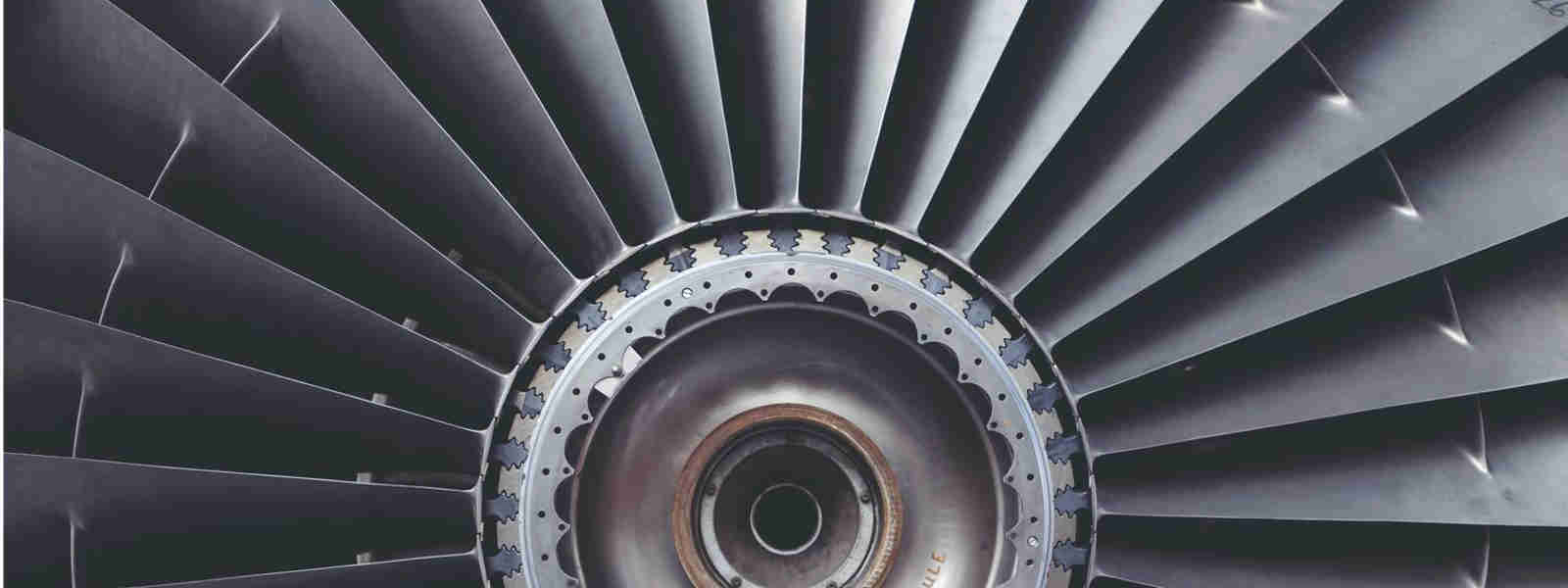
Turbomachinery – from centrifugal pumps and compressors to turbines and fans – is the backbone of modern industrial and energy facilities. Their design and optimization require a deep understanding of fluid mechanics and precise numerical tools. We combine both: sound engineering expertise with state-of-the-art CFD technology based on completely free software.
Performance Analysis and Design of Turbomachinery with CFD
We are conducting basic Performance analyses and designs of turbomachinery through with state-of-the-art CFD (Computational Fluid Dynamics) methods. The entire analysis workflow is in InsightCAE-Framework fully automated and exclusively uses open-source software. This enables very cost-effective simulations, short turnaround times, and easy integration into automated optimization frameworks.
What are turbomachines – and why is CFD so crucial?
Turbomachinery are rotating fluid machines that transfer energy between a fluid and a rotor. They can be broadly divided into two categories:
- Machinery (e.g., pumps, compressors, blowers): transfer mechanical energy to the fluid
- Power machines (e.g., turbines, water turbines): extract energy from the fluid and convert it into rotational work
The internal flow processes—secondary flows, separations, shock-boundary layer interactions, gap flows—are complex and analytically difficult to fully grasp in detail. Therefore, Computational Fluid Dynamics (CFD) is today the standard tool for the design, analysis, and optimization of these machines.
Our CFD Workflow for Turbomachinery in Detail
Our analysis process covers the entire workflow of a turbomachine simulation – from geometry preparation to result evaluation:
- Geometry Creation and ParameterizationDefinition of blade and housing geometry, optionally based on existing CAD data or through parametric new design
- Networking (Meshing)Automated generation of structured or unstructured computational grids with optimized wall resolution (y⁺ control) for accurate boundary layer modeling
- Steady-state and transient simulationCalculation of operating points using RANS turbulence models; unsteady rotor-stator interactions as needed
- Performance curvesDetermination of free-running curves, pressure-flow rate characteristics, efficiencies, cavitation limits, and other machine-specific parameters
- Results Evaluation and VisualizationAutomated post-processing pipelines deliver reproducible, comparable reports
InsightCAE: Fully Automated CFD Workflow Based on Open Source
The InsightCAE-Framework is a powerful open-source automation framework for CFD and FEM analyses. It orchestrates proven open-source solvers and tools into a seamless, reproducible workflow:
- OpenFOAM as the primary CFD solver – industrially proven, with an extensive turbulence model library
- gmsh / snappyHexMesh for automated, quality-controlled networking
- VTK and ParaView for scalable, script-driven visualization and analysis
- Complete Parameterization of all workflow steps – ideal for variance calculations and sensitivity studies
Automation eliminates manual setup effort for each individual simulation run. This not only reduces sources of error but also significantly shortens the time from problem definition to validated results.
Seamless integration into optimization frameworks
A particular advantage of the automated workflow is the easy connection with numerical optimization methods. Typical use cases include:
- Gradient-based optimization for targeted improvement of efficiency or pressure buildup
- Evolutionary Algorithms and Surrogate Models (e.g., Gaussian Process Regression) for the exploration of large parameter spaces
- Multi-objective optimization (e.g., simultaneous maximization of efficiency and operating range)
- Design of Experiments (DoE) for the systematic investigation of geometric or operational influencing factors
Since each simulation run is fully script-driven and parameter-controlled, hundreds of variants can be calculated and evaluated without manual intervention.
Benefits of our approach at a glance
- Cost-effectiveNo license costs for commercial CFD software
- FastAutomated workflow minimizes manual interventions and turnaround times
- ReproducibleFully documented, versionable simulation setups
- ScalableFrom individual simulation to automated optimization campaign
- TransparentOpen-source software means full traceability of all calculation steps
Typical fields of application
Our CFD analyses for turbomachinery are used in a variety of industrial and research projects:
- Vortex pumps and pump turbines (also for hydropower and pumped storage)
- Axial and radial compressors for process and energy technology
- Ship propellers and jet propellers (in combination with our drag analysis)
- Fans and blowers for air conditioning and ventilation technology
- Steam and gas turbines in power plant applications
Conclusion: Modern turbomachinery CFD – efficient, open, optimizable
With our fully automated CFD workflow based on InsightCAE and open-source software, we offer engineering firms, manufacturers, and research institutions powerful, cost-transparent access to professional turbomachinery simulation. From initial performance map calculation to automated shape optimization – all from a single source, reproducible, and scalable.
Are you planning a CFD analysis for your turbomachinery? Speak to us – together we will find the right simulation strategy for your project.