Thermal flow simulation for spatial energy planning with seawater
Lakes and other surface waters represent an enormous natural energy reserve that can be utilized both ecologically and economically efficiently. By using lake water heat pumps, this stored thermal energy can be harnessed for the heating and cooling supply of buildings, thereby contributing significantly to the decarbonization of municipal heat supply. Thermal flow simulations form an indispensable basis for spatial energy planning and enable a well-founded assessment of the framework conditions and requirements for sustainable thermal utilization of lake water.
Flow simulation as a planning tool for authorities, planners, and energy suppliers
A significant advantage of thermal flow simulations lies in their communicative function: they make the expected thermal and fluid mechanical conditions in bodies of water clearly and understandably visible to all stakeholders – authorities, planners, and energy suppliers. This considerably simplifies water law approval processes and creates a shared planning basis on which well-founded decisions can be made regarding locations, performance classes, and operating concepts for the use of lake water.
3D modeling through depth map digitization
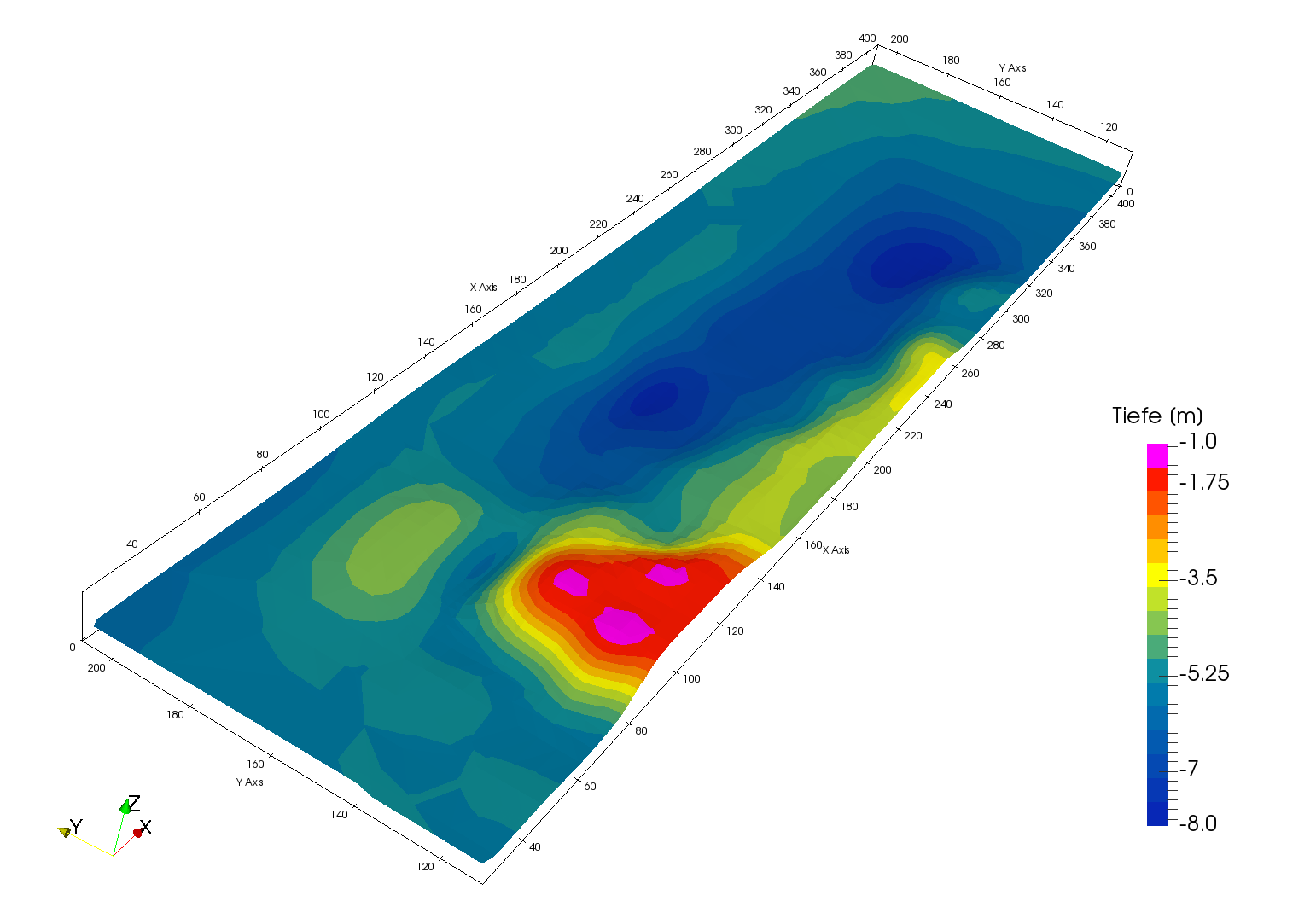
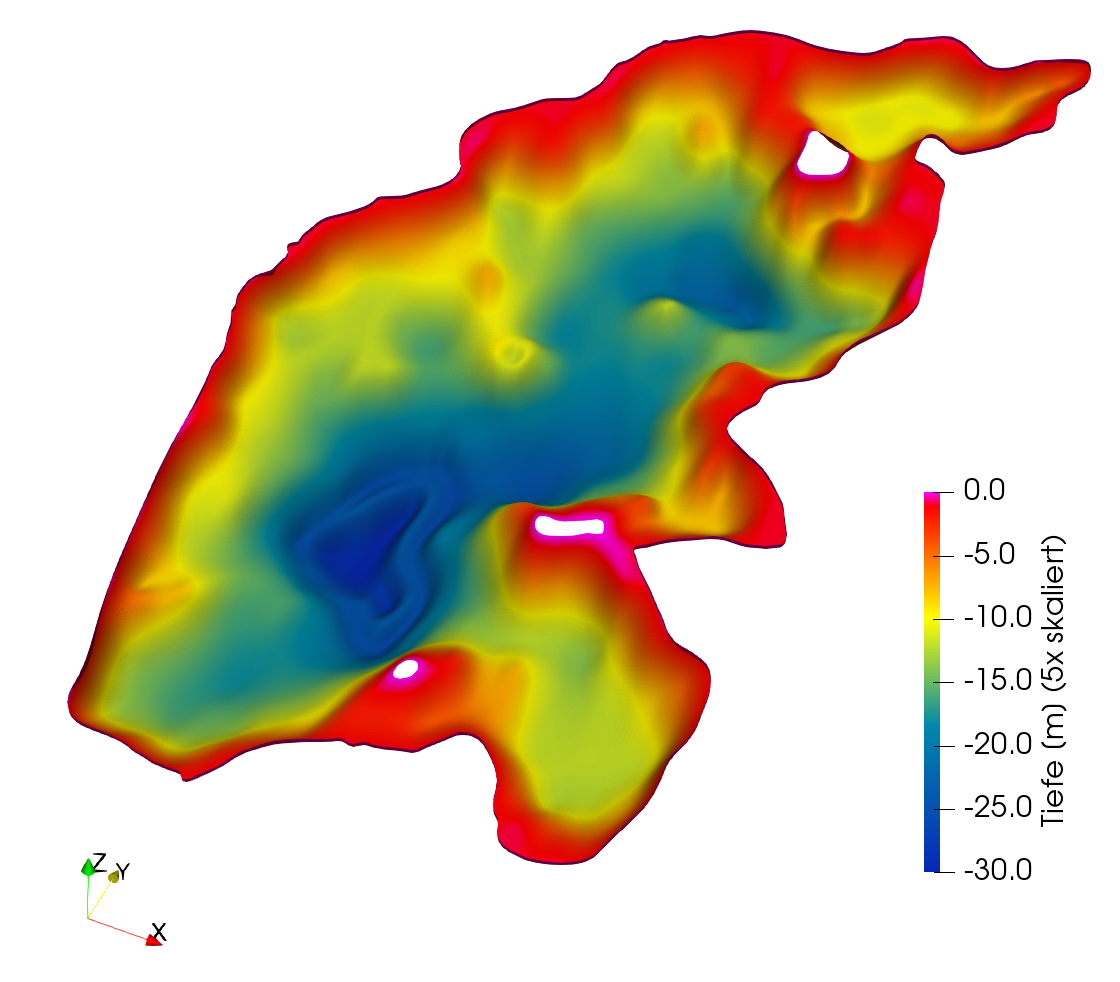
The basis of any thermal flow simulation is a precise digital terrain model of the water body. For this purpose, existing depth maps are digitized and transferred into a three-dimensional computational model that accurately depicts the real basin geometry with its depths and shorelines. The more accurately this 3D model reflects the actual bathymetric conditions, the more reliable and meaningful the results of the CFD simulation will be.
Simulation of temperature stratification in heating and cooling operation
The flow simulation realistically depicts the temperature stratification in the body of water, considering both intake and discharge pipelines for heating and cooling operations. In natural waters, solar radiation, wind mixing, and seasonal influences create a characteristic thermal stratification – the so-called thermocline – which significantly influences temperature availability and flow behavior. The simulation quantifies these complex interactions between heat input/output and natural stratification, thus providing reliable planning data for the design of seawater heat pump systems.
Temporal resolution of seasonal temperature fluctuations
The time-resolved observation of temperature fluctuations in the body of water allows for a realistic assessment of the seasonal performance availability of the seawater system over a complete annual cycle. Temperature profiles and their dependence on weather influences, usage intensity, and operating regimes can thus be analyzed in detail and used for system design.
Optimization of the supply and return geometry to avoid short-circuit flows
By systematically varying the supply and return geometries—that is, the number, arrangement, and orientation of the intake and outfall structures—the respective thermal influence zones in the water body are determined. In this way, hydraulic and thermal short-circuit flows can be reliably avoided, the efficiency of seawater utilization can be maximized, and potential ecological impacts on the water body can be reduced to a minimum.